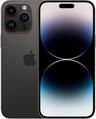
These are two of the most commonly bought used iPhones, and the honest summary is that a year separates them on the calendar and much less than that in the hand.
Both run the A15 Bionic. Both have the same 6.1 inch 60Hz display. Neither has Dynamic Island, and neither has a high refresh rate screen. If you were expecting a generational leap, this is not one.
There is also one iPhone 14 feature that works in Canada and that the 13 cannot match at any price: Emergency SOS via satellite.
The short answer
Buy the iPhone 13 if the price gap is meaningful. It is the better value, and the money is better spent on more storage or a healthier battery.
Buy the iPhone 14 if the gap is small and you photograph a lot in low light, or if the specific unit has a SIM tray and the 13 you are considering does not. Also buy the 14 if you spend time beyond mobile coverage, where satellite SOS earns its place.
Side by side
| iPhone 13 | iPhone 14 | |
|---|---|---|
| Chip | A15 Bionic, 4 core GPU | A15 Bionic, 5 core GPU |
| Display | 6.1 inch, 60Hz | 6.1 inch, 60Hz |
| Main camera | 12MP | 12MP with sensor shift stabilisation |
| Low light | Good | Better, via the Photonic Engine |
| Battery | Up to 19 hours video | Up to 20 hours video |
| Crash Detection | No | Yes |
| Satellite SOS | No | Yes, and it works in Canada |
| Weight | 174 g | 172 g |
Current prices
The feature the iPhone 13 cannot match
This deserves its own section, because it is one of the two headline reasons Apple gave for upgrading to the iPhone 14, and in Canada it applies to you.
Emergency SOS via satellite has worked in Canada since late 2022. With no mobile signal and a clear view of the sky, an iPhone 14 can text emergency services by satellite. The iPhone 13 cannot do this at all, and no update will add it, because it needs the 14's hardware.
If you hike, drive remote highways or spend weekends at a cottage beyond coverage, that is a genuine reason to choose the 14. If you rarely leave the city, it is a safety net you may never use, and the price gap should decide.
Crash Detection is the other iPhone 14 addition, and it works anywhere, because it runs on the phone's own sensors.
Where the iPhone 14 is genuinely better
Three things, and they are real even if they are modest.
Low light photography. The Photonic Engine improves low light performance across the cameras, which Apple quotes as a substantial gain. This is the most noticeable difference in practice, and it shows at evening events, indoors and through the short days of winter.
Sensor shift stabilisation on the main camera, which was previously reserved for Pro models. Sharper handheld shots and steadier video.
A five core GPU rather than four. Useful in games and graphics heavy apps, invisible in messaging, browsing, banking apps and maps.
Plus one extra hour of rated video playback, which is a smaller factor than battery health on any used unit.
Where the iPhone 13 wins
Price. It is consistently cheaper, and at this level that difference buys something concrete: a larger storage tier, or a unit with better battery health.
That is the whole argument, and it is a strong one. Given how close the two phones are, paying meaningfully more for the 14 rarely makes sense unless low light photography is genuinely important to you.
The SIM tray, which may decide it
On used iPhones this is often the deciding factor, and it follows the market rather than the model.
Units sold in Canada and most regions outside the United States have a physical nano SIM tray alongside eSIM. United States units are eSIM only.
So a Canadian iPhone 14 takes a plastic SIM, and so does a Canadian iPhone 13. Ask which market the specific unit came from rather than assuming from the model.
If you move your line between handsets or keep a backup phone, a unit with a tray is worth paying a little more for, whichever generation it is.
The price gap test
Since these phones are so close, let the prices in the tables above decide.
- If the iPhone 14 costs slightly more, take it. The camera gains are free at that point.
- If it costs meaningfully more, take the iPhone 13 and put the difference into storage or condition.
- If one has a SIM tray and the other does not, and you need a tray, that outweighs everything else on this page.
What to check before you pay
Both are pre-owned at this point, so condition matters more than generation.
- Battery health. Above 85 percent is healthy. This affects your day far more than the one hour difference in rated playback.
- Activation Lock. Find My off, no iCloud account signed in.
- Parts and Service History in Settings, General, About.
- Serial number, verified with Apple against the box.
- Which market the unit came from, which decides the SIM tray.
- Face ID and both cameras.
Our used iPhone checklist covers the full inspection.
Where to buy
Redwhale stocks both. Every pre-owned unit is tested before it ships, battery health is disclosed rather than left for you to find, we tell you which market it came from, and purchases carry a 15 day return policy. We deliver across Canada, next day in the GTA.
Browse iPhones, or read the best used iPhones in Canada guide to compare these against the 13 Pro and 14 Pro.
Every unit is tested before it ships and backed by our 15 day return policy. Order online for delivery across Canada, next day in the GTA. Upgrading? Swap your old device towards it.