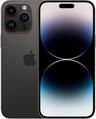
The iPhone lineup got easier to shop this year, for one reason: the 120Hz display is no longer a Pro exclusive. For eight generations the honest advice was usually to stretch to a Pro model if you could. That is no longer true, and it changes which iPhone is the right buy at almost every budget.
In September the 18 Pro and 18 Pro Max joined the top of the range, changing the answer for battery and camera. In October the iPhone Duo, Apple's first foldable, added something new: the largest screen Apple has put in a phone.
Two things are particular to buying in Canada. From the iPhone 17 on, Canadian models have no SIM tray, so the last tray models are suddenly worth more to some buyers. And the choice between buying outright and financing through a carrier often matters more to what you pay than which model you pick. Both are covered below.
Here is which one to choose, sorted by what you actually need rather than by price alone. If you would rather work it out step by step, our How to choose an iPhone guide asks the seven questions behind these picks.
Quick answers
| What you need | The iPhone | Why |
|---|---|---|
| Best for most people | iPhone 17 | 120Hz display, 256GB base storage |
| Best value | iPhone 16 Pro Max | Near flagship for less, and a SIM tray |
| Best battery life | iPhone 18 Pro Max | Up to 45 hours video playback |
| Best camera and zoom | iPhone 18 Pro Max | Variable aperture, 16x optical quality zoom range |
| Biggest screen | iPhone Duo | Folds open to 7.6 inches, two apps side by side |
| Lightest and slimmest slab | iPhone Air | 5.64mm, 165g, titanium |
| Best on a budget | Pre-owned iPhone 13 or 14 | Still fast, still supported, far cheaper |
Current iPhone prices
Prices are in Canadian dollars, before tax. GST or HST is added at checkout at the rate for your province, and delivery is free on orders of CA$500 or more.
Best for most people: iPhone 17
If you are not sure which to buy, buy this one.
The standard iPhone 17 now has a 6.3 inch OLED with ProMotion up to 120Hz, which is the single change you will feel most in daily use. Scrolling, typing and animations are all noticeably smoother than on any non Pro iPhone before it. It starts at 256GB rather than 128GB, runs the A19 chip, weighs 177 grams and is rated at up to 30 hours of video playback.
Its dual 48MP camera system covers a 4x optical zoom range, and the front camera moves to 18MP with Center Stage.
For messaging, browsing, photos, video calls and everything most people actually do, this is the correct iPhone. The one thing to know before you order: the Canadian iPhone 17 is eSIM only. Our iPhone 17 vs iPhone 16 guide sets out exactly what that changes.
Best value: iPhone 16 Pro Max
When the 17 launched, the 16 Pro Max got cheaper without getting worse. That makes it the strongest value proposition in the lineup right now.
You keep a 6.9 inch 120Hz display, a titanium frame, up to 33 hours of video playback, a 5x telephoto and the 48MP main and ultra wide cameras. What you give up against the 17 Pro Max is the vapor chamber, the 8x zoom range, six hours of battery and the 18MP front camera.
It also has one advantage no Canadian iPhone 17 has: a physical SIM tray, alongside eSIM. If you buy a local SIM when you travel, keep a second line, or move your number between phones, this can decide the purchase on its own. The 17 Pro Max vs 16 Pro Max guide covers the rest of the comparison.
Best battery and camera: iPhone 18 Pro Max
If you want the most phone Apple sells, this is it.
- Up to 45 hours of video playback, the longest of any iPhone
- Three 48MP cameras, with a variable aperture main camera from ƒ/1.48 to ƒ/4.0 and a 16x optical quality zoom range
- A20 Pro, Apple's first 2nm chip
- Storage to 2TB
- 18MP Center Stage front camera
In Canada the battery earns its keep in winter. Apple rates iPhones for use between 0 and 35°C, and below freezing a battery runs down faster until the phone warms up again. If you spend a long commute or a day outdoors with maps, music and a hotspot running, this is the phone with the most in reserve.
The 17 Pro Max is now the value alternative: the same 6.9 inch screen, up to 39 hours of video playback, and a price that has started falling since the 18 launched. Our 18 Pro Max versus 17 Pro Max guide sets the two side by side.
Biggest screen: iPhone Duo
Apple's first foldable is the iPhone for people who would rather not carry a tablet as well.
- A 5.4 inch phone closed, a 7.6 inch display open, which Apple says is 50 percent larger than the 18 Pro Max's screen
- Two apps side by side, new to iPhone with iOS 27
- A20 Pro, the same chip as the 18 Pro models, in a titanium body
- Touch ID in the side button, which works open or closed
- Storage to 2TB
The trade offs are a camera without a telephoto lens, shorter battery life than the Pro Max when you use the big screen, a thicker body when closed, and the highest price in the range. It is eSIM only in every country.
Buy it if you read, study or work on your phone every day. If you would mostly keep it closed, the 18 Pro Max is the better phone for less. Our Is the iPhone Duo worth it? and iPhone Duo vs 18 Pro Max guides go through the decision.
Lightest and slimmest slab: iPhone Air
The iPhone Air is the most distinctive phone in the lineup and the hardest to recommend without caveats.
At 5.64mm thick and 165 grams with a titanium frame, it is genuinely different in the hand, and lighter than every other current model. (The iPhone Duo is thinner when open, at 5.2mm, but it is 11.3mm closed.) It runs the same A19 Pro chip as the Pro models with a 6.5 inch 120Hz display, 256GB to 1TB of storage, a 48MP rear camera and the 18MP front camera.
The trade offs are real:
- One rear camera. No ultra wide, no telephoto.
- Up to 27 hours video playback, the shortest in the current range, and the one most likely to feel short on a cold day.
- eSIM only everywhere. There is no regional variant with a SIM tray.
Buy it if thinness and weight genuinely matter to you. If they do not, the iPhone 17 costs less and does more.
Best on a budget: pre-owned iPhone 13 or 14
The best value in the whole lineup is often not a current model.
A pre-owned iPhone 13 still receives iOS updates, still holds a full day of battery on a healthy cell, and costs a fraction of a current flagship. The iPhone 14 adds one thing that matters more in Canada than in most places: Emergency SOS via satellite, which has worked here since late 2022. If you hike, drive remote highways or spend weekends at a cottage beyond coverage, it is worth the step.
The catch is condition, not age. On a unit that has been in use since launch, battery health is the thing to check, and a replacement may be due within a year or two. Factor that into the price and these are still the best money in the lineup.
Our best used iPhones in Canada guide ranks the pre-owned models, and iPhone 13 vs iPhone 14 settles the most common choice between them.
Do you actually need a Pro model?
Less than you used to.
Before this generation, Pro models were the only way to get a 120Hz display. Now that the standard iPhone 17 has one, the remaining Pro advantages are narrower:
| Feature | Standard | Pro |
|---|---|---|
| 120Hz display | Yes | Yes |
| Telephoto lens | No | Yes |
| ProRes and ProRes RAW video | No | Yes |
| Battery life | Good | Longest |
| Storage ceiling | 512GB | 1TB or 2TB |
| Weight | Lighter | Heavier |
Buy Pro if you shoot at distance, record professional video, or want the longest battery available.
Buy standard if you do not. You will not be missing the things you actually use, and the standard models are lighter.
Outright or through your carrier?
This decision often moves the total more than the choice of model.
Carrier financing spreads the phone over 24 months, usually at 0 percent, but it comes tied to a plan, and the plans that qualify tend to cost more each month than a bring your own phone plan with the same data. Some carriers also offer a lower monthly figure in exchange for returning the phone after two years, or paying off the rest if you want to keep it.
Buying outright costs more on the day and less over two years in most cases. You can take the cheapest plan that suits you, switch carriers whenever a better deal appears, and sell the phone when you upgrade.
Locking is not a reason to choose one or the other. Under the CRTC Wireless Code, every phone sold in Canada since December 2017 has been sold unlocked, and a carrier must unlock an older one for free if you ask. The phones we sell are unlocked and work on any Canadian carrier.
Our iPhone price in Canada guide works through the comparison in more detail.
The eSIM question
Apple sells the iPhone 17 line in Canada as dual eSIM with no SIM tray, the same as in the United States. The iPhone Air is eSIM only worldwide, the iPhone 18 Pro units we sell have no tray, and the iPhone Duo is eSIM only in every country.
For most people this changes nothing. Bell, Rogers, Telus, Freedom and their other brands support eSIM, and calls and data work exactly as they do on a plastic SIM. If you are on a small prepaid brand, check with it before you buy an eSIM only phone.
Setting up is quicker than it sounds. When you move from one iPhone to another, setup offers to transfer your number with carriers that support it. Otherwise, ask your carrier to move your number across; most can do it online, in their app or on a short call.
Where a tray still matters:
- You travel and buy local SIM cards abroad. A travel eSIM covers most trips, but not every country or every prepaid plan.
- You move your line between phones often, or keep a second handset.
If either describes you, look at a Canadian iPhone 16, 16 Pro or 16 Pro Max, or an older model. We tell you which market each unit came from, so you know before you order.
What to check before you pay
Wherever you buy, these take a few minutes:
- Battery health. Settings, Battery, Battery Health. Above 85 percent is healthy on a pre-owned unit.
- Activation Lock. Find My off, no Apple account signed in. This cannot be fixed later by the seller.
- Parts and Service History. Settings, General, About lists non genuine parts.
- Carrier Lock. Settings, General, About should say No SIM restrictions. This matters most on phones brought in from the United States.
- IMEI not reported lost or stolen. Check it at Device Check Canada. Our IMEI guide explains how.
- Serial number. Verify on Apple's coverage checker against the box.
- Face ID and every camera lens. Register a face and shoot on each lens. On the iPhone Duo, register a fingerprint for Touch ID instead.
- Make a call. Confirms the line, speaker and microphone at once.
Buying from Redwhale
We sell online and deliver across Canada, next day in the GTA. Every unit is tested before it ships, we tell you which market it came from so you know the SIM situation, and if something is not right when it arrives, our 15 day return policy applies as long as it comes back in the condition it reached you. Run the checks above the day it lands.
Browse iPhones, or add AirPods and a MacBook if you are building a full setup. If you have an old phone in a drawer, Swap can put it towards the new one.
Every unit is tested before it ships and backed by our 15 day return policy. Order online for delivery across Canada, next day in the GTA. Upgrading? Swap your old device towards it.